The Capitoline MuseumsMusei CapitoliniThe Musei Capitolini are the civic museums on the Capitoline Hill, housed in the Palazzo dei Conservatori and the Palazzo Nuovo on Michelangelo's square. They hold the Capitoline She-wolf and the bronze Marcus Aurelius. attribute the bronze She-Wolf to Etruscan or Magna Graecia workshops of the fifth century BC, note that the twins were added later, and record that the donation of Sixtus IV brought it to the Capitoline Hill. That single set of facts unsettles the familiar reading: the animal at the centre of Rome's self-image may have had nothing to do with Romulus when it was cast.
A fifth-century BC animal, a later pair of twins
The institution's own entry places the Wolf in the fifth century BC and assigns it to Etruscan or Magna Graecia hands. Rome's founding legend, by contrast, reached its canonical written form centuries afterwards. The Capitoline Museums also state plainly that the twins were added later, a detail that turns the group into two separate historical events rather than one ancient composition. Read the Capitoline She-Wolf on its own terms and the animal stops being an illustration of a story and becomes an object with its own chronology. The she-wolf as a protective, nurturing or ferocious creature recurs across central Italian art before Romulus, a fifth-century BC bronze could have carried meanings that had nothing to do with twin founders.
What the donation of Sixtus IV actually did
The same source records that the donation of Sixtus IV brought the sculpture to the Capitoline Hill. That transfer is the moment the Wolf entered the civic space that would define it as Rome's emblem, and it is also the context in which the later twins make sense. The Capitoline Museums' own page (https://www.museicapitolini.org/en/opera/lupa-capitolina) is the authority here: Etruscan or Magna Graecia, fifth century BC, twins added later, Sixtus IV's donation. The pairing of wolf and twins is therefore a decision made in and around the Capitoline, not a fact of the original casting.
How to look at the twins
When the group is examined with that sequence in mind, the twins read as an addition that answers a question the Wolf did not originally pose. The fifth-century BC animal can be studied for its own form and material, the twins can be studied as evidence of how Rome later recruited an older object into its foundation story. The Capitoline Museums' attribution does not diminish the symbol. It makes it more interesting, because it splits a single icon into an ancient animal and a later interpretive layer. Visitors who keep that distinction in view will see the same bronze differently from those who arrive expecting Romulus.
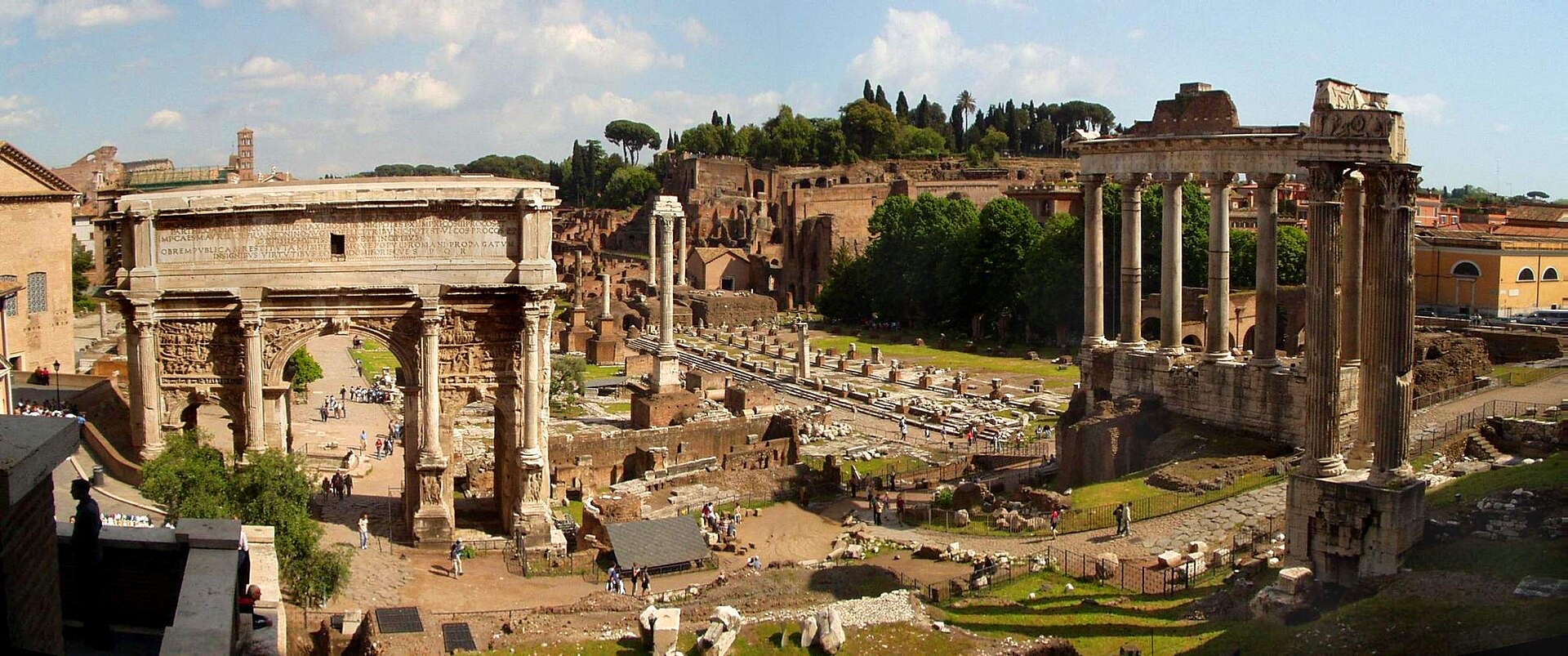
Elsewhere in Rome, the same habit of reading objects against their later legends pays off at the Pantheon dome and oculusOculusThe oculus is the open circle at the top of the Pantheon's dome, the building's only source of light. Rain falls through it onto a floor with drains, and the light moves across the interior through the day. and at the Colosseum and Roman Forum, where imperial monuments were reused and reinterpreted long after their builders.
More on the place itself: capitoline she wolf.
Best tours and tickets in Rome Museums
Curated selection. We may earn a commission if you book, at no extra cost to you.

Capitoline Museum Experience with Multimedia Video

Vatican Museums, Sistine Chapel & St Peter’s Basilica Guided Tour

Rome: Colosseum, Roman Forum and Palatine Hill Guided Tour

Tour of St Peter's Basilica with Dome Climb and Grottoes
Frequently asked questions
Who does the Capitoline Museums say made the She-Wolf?
When were the twins added?
How did the She-Wolf reach the Capitoline Hill?
Does the fifth-century BC date support a direct link to Romulus?
What is the primary source for these attributions?
How should a visitor approach the group?
Related guides
Caravaggio in Berlin, Not Rome: What the Late-September Show Means for Your Museum Plan
A Caravaggio work is on show in Berlin until 25 September. Check where Rome's Caravaggios actually hang before you build a museum day around them.
Read more →Rome Museums in Late 2026: Exhibitions and Heritage Changes to Plan Around
Etruscan bronzes in Milan until 4 October and Florence open studios on 26-27 September and 2 October. What Rome-bound travellers should book and skip.
Read more →Marcus Aurelius in Rome: How a Misidentified Bronze Survived the Middle Ages on the
How Rome's equestrian statue of Marcus Aurelius survived the Middle Ages by being mistaken for another emperor, and why the original now stands indoors.
Read more →Velázquez's Innocent X and Algardi's Porphyry Bust: Why One Small Room at the Doria
The Velázquez Cabinet at the Doria Pamphilj Gallery pairs the 1650 Portrait of Pope Innocent X with Algardi's porphyry and bronze bust of the same pope.
Read more →2026 Roman Museums: No Major Closures, New Research Events with Art and Archaeology Focus
Check current 2026 museum access rules, new events in Rome, and important heritage updates for better visit planning.
Read more →Kandinsky Exhibition in Rome Adds Gabriele Münter Section at Palazzo Bonaparte
Rome's Kandinsky exhibition at Palazzo Bonaparte now includes a section on Gabriele Münter, his companion and a major Expressionist painter in her own
Read more →Editorial summary produced with AI support and reviewed. Information can change. Verify anything important with the official venue or operator before you act. Spotted an error? Use the contact form and we will correct it.
All prices and times on this page are ESTIMATES and change often. They are a starting point from an independent editor, never official or guaranteed figures. Always check the final price and the opening hours with the official venue or operator before you book or travel.