Apollo and Daphne: plan a Borghese slot around Bernini
Open with the answer
<!-- attraction:answer -->
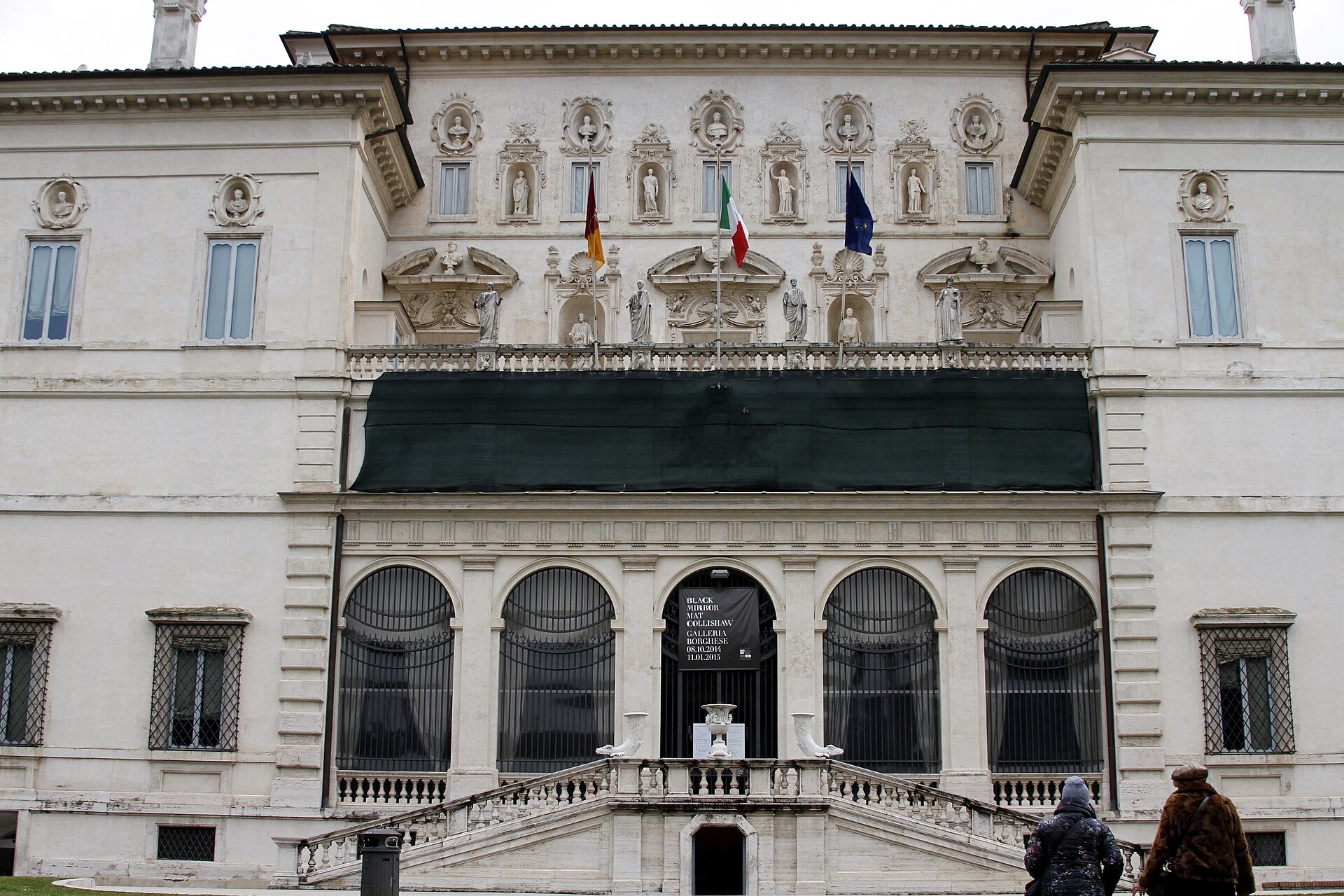
The Galleria BorgheseGalleria BorgheseThe Galleria Borghese is the state museum in the Borghese villa holding Bernini's sculptures and the Caravaggio paintings collected by Cardinal Scipione Borghese. Entry is by reserved two-hour slot only. admits visitors in two-hour slots, and most people save Apollo and Daphne for last after exhausting themselves elsewhere. Start with BerniniGian Lorenzo BerniniGian Lorenzo Bernini (1598 to 1680) was the sculptor and architect who shaped Baroque Rome: the Borghese sculpture groups, the colonnade of St Peter's Square and the fountains of Piazza Navona.'s sculpture rooms instead. The transformation scene deserves fifteen quiet minutes, not a rushed glance before your time runs out.
Is it worth it?
<!-- attraction:worth -->
Apollo and Daphne is Gian Lorenzo Bernini's marble argument that stone can move. The moment Daphne's fingers stiffen into laurel branches, her skin roughens to bark, and Apollo's hand meets wood instead of flesh is carved in three dimensions you can walk around. It beats every photograph you have seen.
The case against is the slot system itself. You cannot return later if you arrive tired. If you follow the standard route, paintings upstairs, ancient sculptures, then Bernini, you reach Apollo and Daphne with twenty minutes left and dead legs.
Skip this work if you care only about CaravaggioCaravaggioCaravaggio, born Michelangelo Merisi in Milan in 1571 and dead at Porto Ercole in 1610, is the painter of dramatic light whose Roman years left works in the Borghese, the Doria Pamphilj, Palazzo Barberini and three ch.... The Borghese holds several of his paintings upstairs, and if early BaroqueBaroqueThe Baroque is the art of seventeenth-century Rome: theatrical, emotional and built for the Counter-Reformation papacy. Bernini, Borromini and Caravaggio are its Roman names. oil is your single priority, spend your two hours there. Everyone else should plan the visit backwards from this statue and the neighbouring Bernini works commissioned by Cardinal Scipione Borghese in the early seventeenth century.
What you actually see and do
<!-- attraction:experience -->
Apollo and Daphne occupies a ground-floor room in the villa built for Scipione Caffarelli Borghese between 1607 and 1633, when the cardinal nephew of Pope Paul V Borghese assembled one of the largest art collections of his time. The sculpture was carved between 1622 and 1625.
You walk in a full circle. From the front, Apollo is still reaching. From the left, Daphne's toes root into the floor and bark climbs her shin. From behind, individual laurel leaves flicker where her hands used to be. The marble is thin enough in places that light would pass through if you held a torch behind it, though you cannot.
The same room holds other Bernini works from the same patron and the same decade. Pluto's fingers sink into Proserpina's thigh in the Rape of Proserpina, carved in 1621 and mentioned on the official collection page. Flesh yields under stone pressure. That piece makes the technical point clearly, but Apollo and Daphne makes it while telling a harder story. Transformation is more difficult to carve than abduction.
How long it takes and when to go
<!-- attraction:timing -->
Allow fifteen minutes for Apollo and Daphne alone if you want to look from every angle and understand the surfaces. Add another twenty-five minutes for the other Bernini sculptures in the ground-floor rooms. That puts you at forty minutes of sculpture before you climb the stairs to the paintings.
Most visitors do the opposite. They start upstairs with RaphaelRaphaelRaphael (1483 to 1520) painted the four Raphael Rooms in the Vatican for Julius II and his successors and is buried in the Pantheon. His Transfiguration hangs in the Vatican Pinacoteca.'s Deposition, stolen on behalf of Scipione from a convent in Perugia and lowered from the town walls during the night of March 18-19, 1608, according to the official collection history. They see Caravaggio, Titian, and the rest of the paintings, then descend with thirty minutes remaining and try to process Bernini at the end.
The Galleria Borghese publishes no stable advice about which ticket times are quieter. Check the current visit and ticket page at galleriaborghese.cultura.gov.it for slot availability, but do not assume any hour guarantees a lighter room. What you can control is the order. Sculpture first means you see Bernini when you are still alert.
How to get there
<!-- attraction:access -->
The Galleria Borghese sits inside Villa Borghese park, north of central Rome. The official pages supplied for this guide do not specify transport routes, Metro stops, or bus lines, so verify the current journey on the museum's visit page at galleriaborghese.cultura.gov.it.
From Termini station the park is reachable by Metro or by walking north through the city, though the exact line, stop, and walking time depend on which park entrance you use and where in the park the gallery sits. Do not assume a single station delivers you to the door. The villa grounds are large, and some entrances require a walk through the park itself.
If you are staying in the historic centre near Piazza di Spagna, walking may be faster than waiting for a connection. If you are coming from Trastevere or the Vatican, expect at least one change. Check a current Rome transport map before your visit day, and add fifteen minutes to whatever the app estimates. Paths through Villa Borghese are not always direct.
What to know before you go
<!-- attraction:practical -->
The two-hour slot is enforced. When your ticket says 11:00-13:00, you enter at eleven and leave by one. There is no extending it if you spent too long upstairs. Route planning happens before the visit, not during it.
Bags larger than a small daypack require check-in. Camera phones are generally allowed for personal use, but verify the current photography rule on the official site, as policies around flash and tripods change. Bring water, because two hours of standing on marble floors is tiring and there may not be a cafe inside the slot.
The most common mistake is treating the Borghese as a painting gallery with sculpture as a bonus. Scipione Borghese collected both, securing works by Caravaggio through confiscation and acquiring Raphael's Deposition by theft, according to the museum's own history page. But Bernini's commissions were carved specifically for this villa, and the sculptures shaped how the ground-floor rooms were designed. See them while you still have stamina.
Who it suits
<!-- attraction:fit -->
First-timers to Rome should go if they have already booked the Vatican and the Forum and want a smaller, appointment-based gallery where crowding is capped by the slot system. Families with children old enough to handle two hours of looking without touching will find the sculptures easier to explain than oil paintings. Couples who care about Baroque art and are comfortable booking weeks ahead have a better chance here than at open-admission museums where queues eat the morning. Repeat visitors to Rome often rank the Borghese higher than the big three, because the forced time limit and the setting inside the park feel less industrial. Rain does not matter, because the collection is indoors and the walk through Villa Borghese to reach the entrance is short from some gates, though you may get wet depending on your route.
Official sources
- https://www.collezionegalleriaborghese.it/en
- https://galleriaborghese.cultura.gov.it/en/visita/info-bigliettiBigliettoBiglietto is the Italian word for ticket, and biglietteria is the ticket office. On Rome museum websites the word covers everything from a paper ticket to a QR code bought online./
Best tours and tickets
Curated selection. We may earn a commission if you book, at no extra cost to you.

Rome: Borghese Gallery & Gardens Small Group Guided Tour

Rome: Colosseum, Roman Forum and Palatine Hill Guided Tour
Frequently asked questions
How much time should I spend looking at Apollo and Daphne?
Can I visit Apollo and Daphne without booking ahead?
Should I see the paintings or the sculptures first at the Borghese?
Is Apollo and Daphne better than the other Bernini sculptures at the Borghese?
Can I take photos of Apollo and Daphne?
What else is in the same room as Apollo and Daphne?
Related guides
Rome Museum News: What Actually Changed for Visitors This Autumn
The freshest Rome heritage news is thin this week: two art fairs in London and Venice, and what they mean for museum-goers planning a Rome trip.
Read more →Rome Museums in 2026: What Actually Affects Your Visit
Rome museum and heritage changes in 2026. What travelers need to check before booking timed entry, Vatican Museums tickets and archaeological sites.
Read more →Rome Museums in Late 2026: What Actually Changes for Bookings and Timed Entry
What late 2026 changes mean for Rome museum bookings, timed slots and archaeological site visits, with official pages to confirm before you travel.
Read more →Rome Museums in 2026: New Rules, Closures and What to Book Before You Go
What changed at Rome's museums, archaeological sites and Vatican collections in 2026, plus what to reserve and which official pages to check.
Read more →Rome Museums This Week: New Tiepolo Prints in Turin and What Else Changes for October
New Tiepolo print show in Turin, De Sica documentary on Sky Arte and what Rome visitors should book ahead this October.
Read more →Galleria Borghese Expansion: Design Competition Opens, Tickets Still Timed
Rome's Galleria Borghese launches an international design competition to improve access. What changes for visitors, and why you still need timed tickets.
Read more →All prices and times on this page are ESTIMATES and change often. They are a starting point from an independent editor, never official or guaranteed figures. Always check the final price and the opening hours with the official venue or operator before you book or travel.