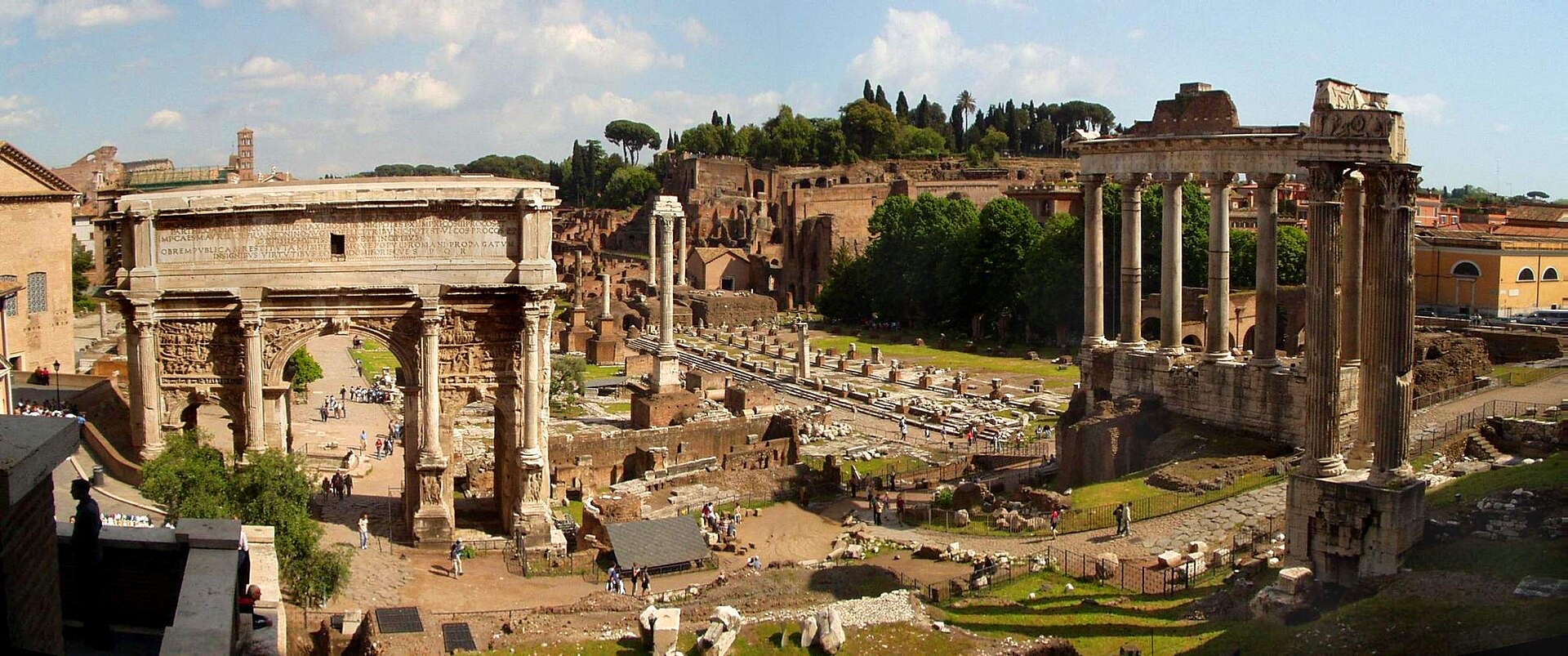
The theatre of Ostia AnticaParco archeologico di Ostia anticaThe Parco archeologico di Ostia antica is the state site covering the ancient port city of Rome at the mouth of the Tiber, plus the harbours of Claudius and Trajan and the Portus necropolis. carries an inscription linking it to Agrippa, son-in-law of Augustus, and was enlarged at the end of the second century AD to seat 4,000 spectators. That combination of imperial patronage and later expansion anchors any route through the port, and it rewards a plan made before boarding the train.
Why the theatre anchors the site
Most visitors arrive at Ostia Antica expecting a scatter of ruins and leave with a single building fixed in memory. The theatre does that work. Its inscription ties the structure to Agrippa, the general and son-in-law of Augustus, which places Ostia's entertainment architecture inside the dynastic politics of the early empire. The later enlargement to 4,000 seats, documented by the Parco Archeologico di Ostia Antica, is not a footnote: it marks the moment the port's civic ambition outgrew its first imperial sponsor. The theatre becomes a measuring stick for the town's trajectory, from republican harbour to imperial service hub.
That is why a route through the site should start or end here. The theatre of Ostia Antica sits near the main axis of the excavated area, so it functions as a landmark the way the Colosseum does in Rome, even if the scale is smaller. From the seating cavea, the plan of the port reads more clearly: baths, warehouses, insulae, and the streets that connected them. The primary source for the inscription and the 4,000-seat enlargement is the official page of the Parco Archeologico di Ostia Antica: https://ostiaantica.cultura.gov.it/pannelli-didattici-e-mappe/larea-del-teatro/teatro/.
What the scale tells you
A 4,000-seat theatre in a port town is a statement about audience. Ostia was not a resort, it was a working city tied to Rome's grain supply and commercial traffic. The enlargement at the end of the second century AD suggests that the theatre served a population that expected regular spectacle, not occasional entertainment. For a visitor, that changes how the rest of the site reads. The Piazzale delle Corporazioni, the warehouses, and the bath complexes are not backdrop, they are the infrastructure that made a 4,000-seat venue plausible.
Comparisons with Rome's monuments help calibrate the visit. The Colosseum and Roman Forum show imperial spectacle at maximum scale, while the Baths of Caracalla mosaics demonstrate how decoration signalled status in public buildings. Ostia's theatre operates in the same grammar, but at the scale of a port that served the capital rather than ruled it. The Pantheon dome and oculusOculusThe oculus is the open circle at the top of the Pantheon's dome, the building's only source of light. Rain falls through it onto a floor with drains, and the light moves across the interior through the day. is another useful reference point for how Roman builders handled audience and enclosure, even if the building type is different.
What to look for during a visit
The inscription is the first thing to locate, because it is the fact that ties the structure to Agrippa. From there, look at the cavea and the later additions: the enlargement to 4,000 seats is the physical evidence of the second-century upgrade. The relationship between the theatre and the surrounding streets matters too, since it shows how a port town integrated entertainment into its commercial fabric. A plan made before the train should prioritise the theatre, then radiate outward to the warehouses and baths, rather than treating the site as a random walk. The official Parco Archeologico di Ostia Antica page remains the reference for the inscription and the seat count, and it is the fact that anchors everything else.
More on the place itself: theatre.
Best tours and tickets in Ostia Antica
Curated selection. We may earn a commission if you book, at no extra cost to you.


Vatican Museums, Sistine Chapel & St Peter’s Basilica Guided Tour

Rome: Colosseum, Roman Forum and Palatine Hill Guided Tour

Tour of St Peter's Basilica with Dome Climb and Grottoes
Frequently asked questions
Who is the theatre of Ostia Antica linked to by inscription?
How many spectators could the theatre hold after its enlargement?
When was the theatre enlarged?
Why does the theatre anchor a route through Ostia Antica?
What is the primary source for the theatre's inscription and capacity?
Does the theatre's capacity appear in the primary source?
Related guides
Colosseum Reopens Saturday 26 September 2026: What Visitors Need to Know
The Colosseum Archaeological Park says it reopens Saturday 26 September 2026 from 8:30 AM. Here is what changed and how to plan your visit.
Read more →Rome Museums and Sites: No Major Closures or Ticket Changes for Autumn 2026
Rome museums and archaeological sites remain fully accessible this autumn with no new closures or ticket changes announced.
Read more →Rome's Imperial Forums Get 80 New Worksites and an Antiquarium: What Changes for Visitors
Rome's central archaeological area is being reworked through 80 worksites and over 200 million EUR. Here is what changes for a 2026-2027 visit and what to
Read more →Rome Museums and Archaeology: Key 2026 Closures and Access Updates
Check which Rome museums and archaeological sites have closures or access changes in 2026 and how to plan your visit accordingly.
Read more →Reading the Baths of Caracalla Without a Reconstruction: How the Mosaics Reward a Slow
The Baths of Caracalla opened in 216 AD and still teach visitors how to read Roman mosaics and hall scale without any digital reconstruction.
Read more →Rome Museums in Autumn 2026: What Changes for Your Visit
Rome museum and heritage visits in autumn 2026: what travelers should check before booking, from timed entry to official programme confirmations.
Read more →Editorial summary produced with AI support and reviewed. Information can change. Verify anything important with the official venue or operator before you act. Spotted an error? Use the contact form and we will correct it.
All prices and times on this page are ESTIMATES and change often. They are a starting point from an independent editor, never official or guaranteed figures. Always check the final price and the opening hours with the official venue or operator before you book or travel.